// SPACEX IPO PLANNING GUIDE
Space X is going public.
Debating the valuation is a sideshow; employees should focus on their options.
Headlines and pundits argue whether SpaceX is worth $600 billion or $2 trillion. For employees who hold equity, that’s a sideshow. What deserves your attention is what you can control — when you can sell, how much to keep, and how to handle the tax and concentration that come with it.
// why this matters
You've done the math in your head. Let's make it concrete.
After years of holding equity you couldn’t sell, there’s suddenly a market price attached to it — and a clock. For many employees this is the largest, most concentrated position they own, and the first real chance to do something about it. Even a decade of diligently saving may pale in comparison to your upcoming decisions in terms of its effect on your financial life.
An Illustrative Example
An early engineer holds 12,000 vested shares. At a hypothetical $135 IPO price, that’s $1.62M (and perhaps 80% or more) of their net worth tied to a single stock. The question isn’t “do I believe in SpaceX?” It’s “how much of my future should depend on one outcome, now that I can finally choose?”
Illustrative and hypothetical. Your grant type, strike, cost basis, and tax situation may differ materially.
// the historical record
Instead of debating the value, let's look at history
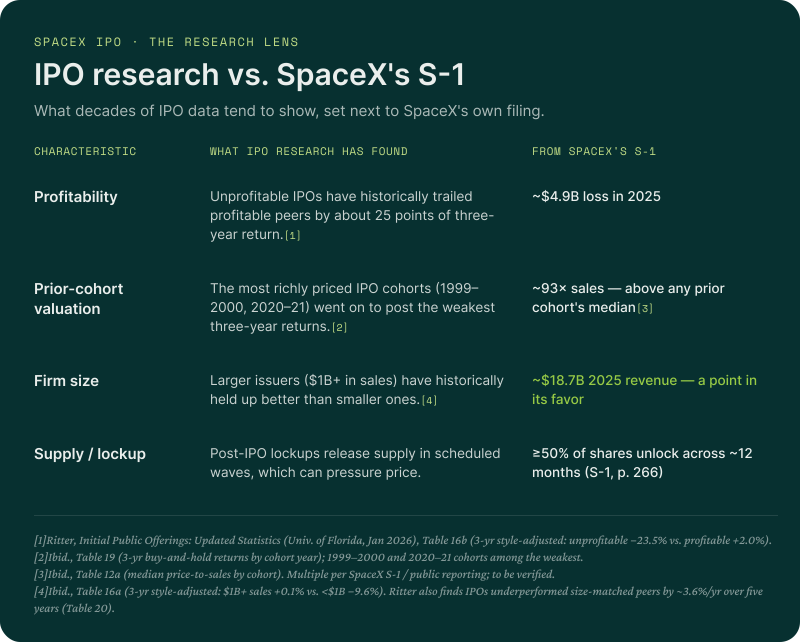
We’re not putting a price on SpaceX — no one credibly can. Instead, here’s what five decades of independent IPO research found about offerings that share SpaceX’s characteristics. The patterns below come from Prof. Jay Ritter’s IPO research (not from Prospero); SpaceX’s own figures come from its S-1.
// YOUR SITUATION
Personal context informs the best course of action.
Concentration. 20% of your net worth or 90%? Life-changing or incremental? This sets the stakes for everything else.
Constraints. Current vs. former employee, your lockup terms, blackout windows, 10b5-1 eligibility — what you can do, and when.
Future exposure. Still vesting? More shares are coming — so today’s position understates your eventual concentration.
Tax. RSU vs. ISO vs. NQSO, cost basis, holding period, state of residence. This is where the most is made or lost.
Disposition. Conviction in the mission, risk tolerance, liquidity needs. The plan should fit you, not a spreadsheet.
A Position Is Not a Plan
Say SpaceX is 90% of your net worth at listing. Even deep conviction doesn’t change the arithmetic: one stock controlling that much of your wealth is a position, not a plan. Trimming toward, say, 30–40% can still leave you heavily exposed to the upside you believe in — while making the downside survivable.
Illustrative; the right allocation depends entirely on your circumstances.
// What you can do
Liquid shares unlock new tools.
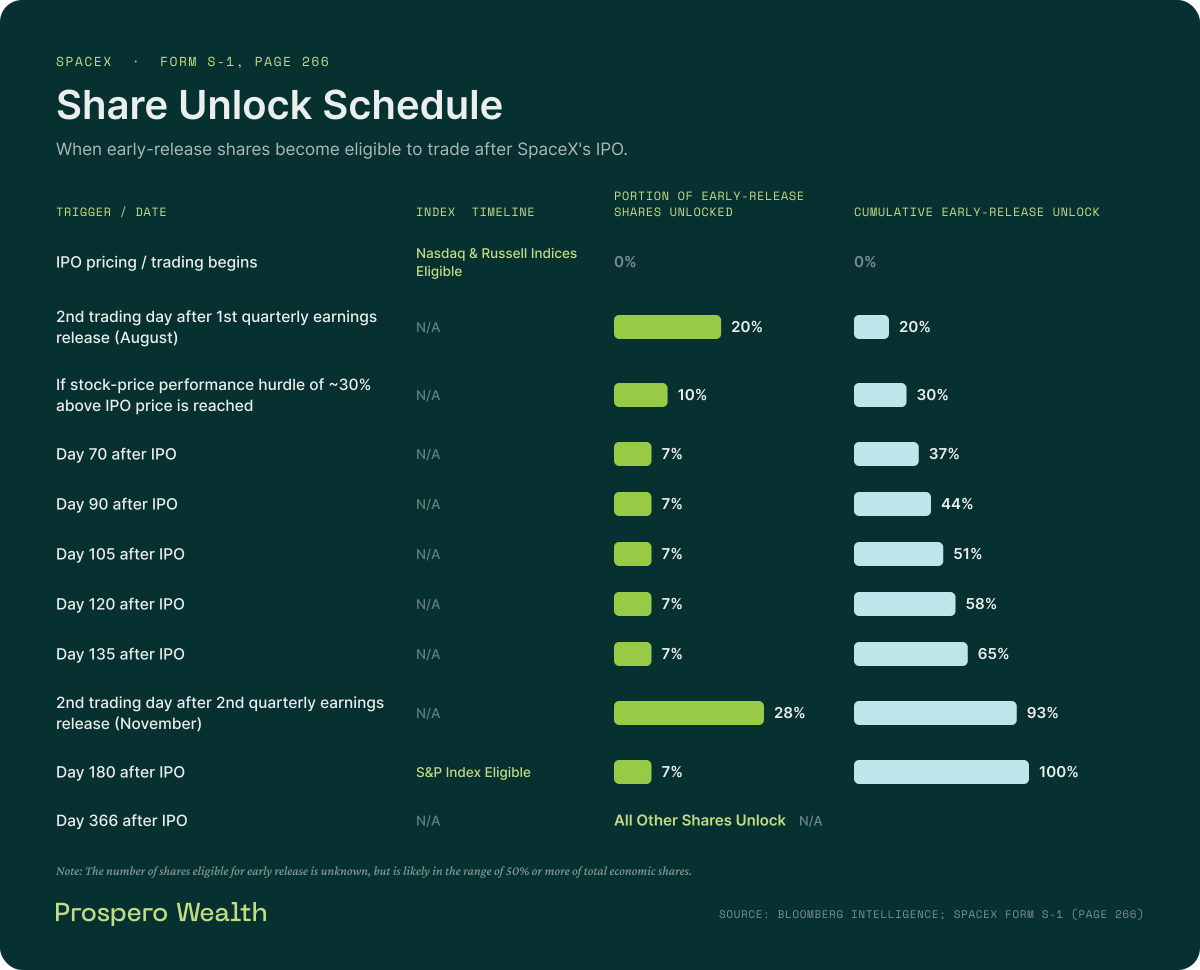
It goes well beyond “sell some and buy an index fund” — and the unlock calendar above is your execution calendar. Strategies we help clients evaluate and coordinate, organized by the job they do:
Keep your upside, make a crash survivable. A protective collar — buy a put, sell a call — may, in some cases, cap the downside at little or no net cost while you wait out a lockup. Puts alone buy insurance outright.
Diversify without a giant tax bill. 351 exchange funds may make it possible to move concentrated shares into a diversified fund without creating an immediate taxable sale. A 10b5-1 plan pre-commits a selling schedule that survives blackout windows.
Turn the position into income. Covered calls produce cash flow against a position you intend to hold, in exchange for capping some upside.
Make the sell-down tax-efficient. Tax-aware long/short portfolios may be able to harvest losses to offset the gains you realize as you diversify.
Deadlines and decisions require good counsel.
What we see consistently: smart, analytical people who learn things fast and ask good questions, but who can’t find the answers to the questions that really matter. I.e., what should they do? How will this impact their taxes this year, and in the future?
The guidance they find online – even from frontier model LLMs -- is generic or hedged, because of course it is. After all, your situation is unique to you.
// WHAT WE DO
The value we add isn’t secret information. It’s knowledge of the tools that are available and how to use them.
It’s coordinating investments while taking into account potential tax considerations and estate planning impacts too. It’s getting on the phone with your accountant if we need to, so that we can get into the weeds and nerd out on tax codes.
It’s having been tech and startup workers who understand equity compensation deeply enough to translate between the technical details and the life decisions.
// the next step
Why not get a second opinion?
A conversation typically covers three things: a review of your position and concentration, a preliminary tax picture for the year of the event, and an honest read on whether working together fits. Our advisors are former tech professionals who’ve been on your side of these decisions.