STRATEGIES
Long / Short Portfolios
When they may be useful, how they work, what their limitations are.
Concentration Risk & Taxes
You've spent years watching a position grow. Maybe it was through RSUs at Amazon, Meta stock from your early employee days, or an inherited Apple position your parents held for decades.
Now you're facing a problem you don't know how to solve: the position represents an uncomfortable percentage of your net worth, but selling means writing a six-figure check to the IRS.
You're not sure what to do, robo advisors won’t help, and many human advisors might just say ‘sell it and diversify.’ Instead, you choose to hold it and hope. After all, it’s worked so far, right?
// KEY INSIGHT
The challenge is that being highly concentrated can make you rich, but being diversified is what keeps you rich.
The question isn't whether to reduce concentration, but how to do it without triggering an immediate tax bill that feels like punishment for your success.
You feel like there must be other options, but you can only find generic guidance, so you don't know what to do. Instead, you choose to hold it and hope. After all, it’s worked so far, right?
This is where institutional investors have operated for decades, using strategies that allow them to hedge concentrated exposure while maintaining upside participation and deferring capital gains. These approaches have historically been reserved for ultra-high-net-worth families and endowments. Today, they're increasingly accessible to tech professionals with $500K+ in concentrated or highly appreciated positions.
How Long/Short Portfolios Work
A long/short portfolio maintains your market exposure while creating a framework for systematic risk reduction and tax efficiency. The mechanics work roughly like this:
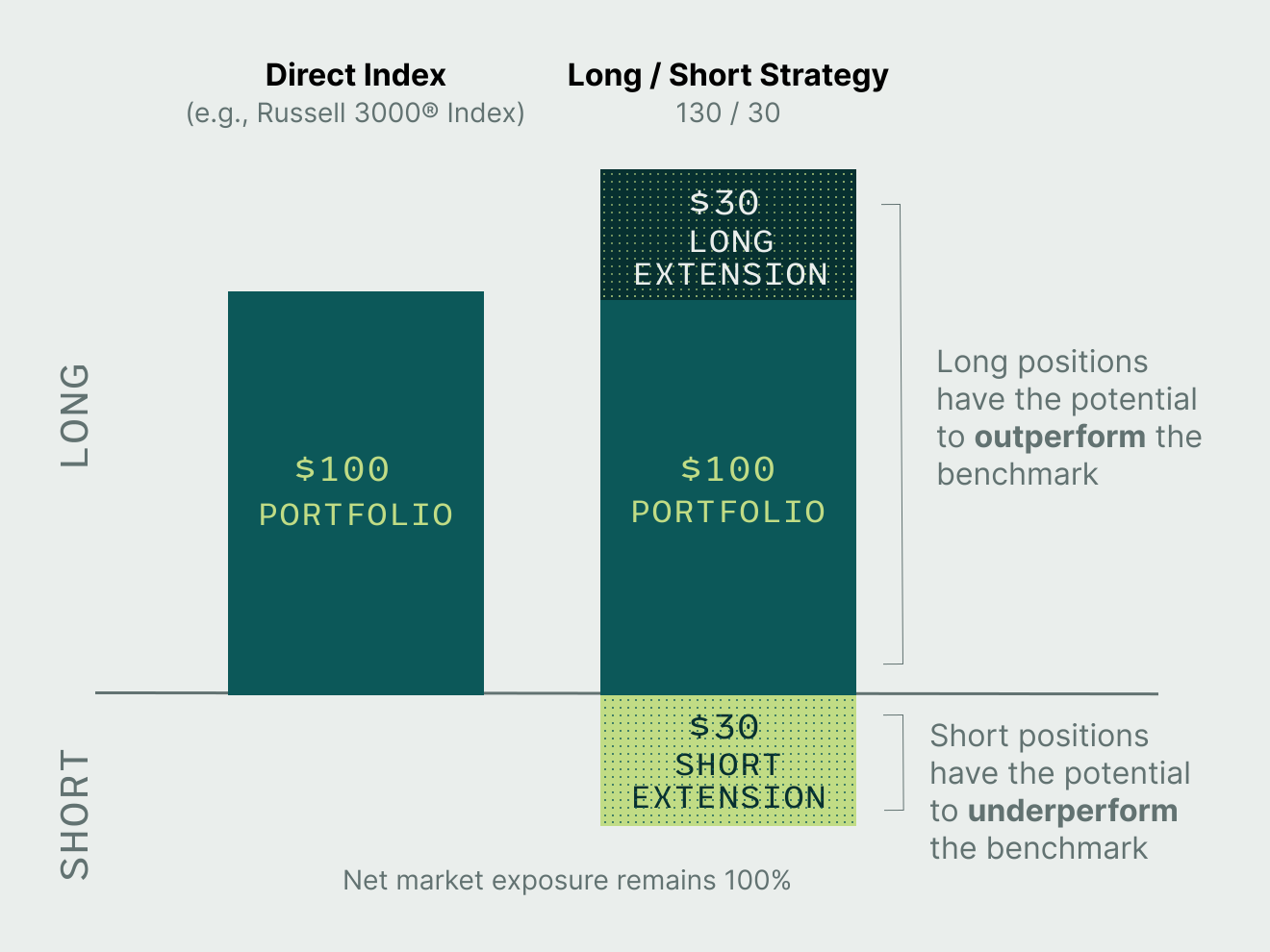
The strategy uses margin to "extend" the portfolio. A traditional all-equity portfolio would be 100% invested in (i.e., "long") stocks. A long/short portfolio however might hold 130% of your capital in long positions while simultaneously shorting 30% in other securities. The net market exposure remains 100%. You're not making a bet that markets will rise or fall. But you've created new flexibility for managing both risk and taxes.
On the Risk Side
One the risk side, the short positions can hedge specific risk factors embedded in your concentrated holding. If your tech stock rises with the Nasdaq, shorting a basket of similar securities can reduce your portfolio's sensitivity to sector-wide moves while still allowing you to benefit from company-specific outperformance.
On the Tax Side
On the tax side, the strategy opens up loss harvesting opportunities that simply don't exist in a long-only portfolio. Short positions generate losses when the underlying securities rise in value, which happens frequently in a rising market. These short-term losses can be used to offset gains that may arise from gradually reducing a concentrated position, effectively subsidizing diversification.
When Traditional Tax-Loss Harvesting Isn't Enough
Direct indexing — owning individual stocks that track an index rather than buying a fund — has become a popular approach to tax-efficient investing. By holding hundreds of individual securities, you create opportunities to harvest losses when individual names decline, even as the broader index rises.
For portfolios funded with cash, this works well. But concentrated positions present a different challenge. The embedded gains are often so substantial that harvested losses from a direct indexing sleeve may only chip away at the edges.
// THE LIMITATION
… harvested losses from a direct indexing sleeve may only chip away at the edges.
Tax-advantaged long/short strategies address this limitation. Research from AQR and others suggests that these strategies may realize cumulative net capital losses exceeding 100% of initially invested capital within the first few years — substantially more than what direct indexing typically achieves.
The primary driver of this tax efficiency isn't just loss harvesting in the traditional sense. It's gain deferral. By intelligently managing when gains are realized (and when they're not), tax-aware long/short strategies may slow the unnecessary recognition of taxable events while still pursuing investment objectives.
The Role of Factor-Based Investing
Modern long/short strategies don't just buy some stocks and short others randomly. They employ factor-based models that target specific characteristics associated with long-term outperformance. Three common factors used are:
Value
Buying cheap stocks
Momentum
Buying recent winners
Quality
Buying financially strong companies
This has two implications. First, the strategy aims to generate pre-tax returns above its benchmark; not just match the index while harvesting losses. Second, the active management provides ongoing trading opportunities that create natural tax management events without forcing liquidation of positions you'd otherwise want to keep.
The combination of pre-tax alpha and tax alpha has the potential (but no guarantee!) to compound significantly over time for investors in high tax brackets.
Who This Strategy Serves
Those with:
Concentrated positions of $1M or more where embedded gains represent a significant portion of the position's value
Long time horizons (+10 years or more) to allow tax benefits to compound and to avoid premature exit costs
High marginal tax rates (both federal and state) where the tax alpha is proportionally more valuable
A genuine need to reduce idiosyncratic risk without triggering immediate taxation
Tolerance for complexity in exchange for more sophisticated risk and tax management
Those who may be:
Senior executives holding highly appreciated employer stock
Founders and early employees post-liquidity event with substantial holdings in an acquirer's stock
Beneficiaries of inherited positions with low cost bases but substantial current values
Investors who've accumulated concentrated positions and want institutional-grade options beyond "sell everything" or "do nothing"
LIMITATIONS
Long/short portfolios aren't right for everyone, and we’re not afraid to tell clients when it’s not a good fit for them. Investors should consider:
The costs are real. All-in expenses—management fees, financing charges, transaction costs—typically run 80-150+ basis points higher than direct indexing. For that math to work, your embedded gains need to be substantial and your time horizon long enough for the tax benefits to compound.
Exiting isn't free. The strategy defers gains; it doesn't eliminate them. If you need to unwind the portfolio quickly—whether due to changing circumstances or loss of confidence in the approach—you may face significant tax liabilities. Short positions are always taxed at short-term rates when closed, regardless of how long they were held. And beneficiaries don't receive step-up in basis on shorts. This works best when you can commit to five to ten years.
Complexity has a cost. Your tax return gets longer. Coordination across accounts requires careful attention to wash sale rules. If tax simplicity is a priority—or if the operational overhead will cause more stress than the benefits are worth—simpler approaches exist.
Smaller positions have better options. For concentrated holdings under $1M, or positions with modest embedded gains, direct indexing often delivers most of the benefit at a fraction of the complexity. We size the solution to the problem.
Implementation quality matters enormously. This is specialized work. The difference between a skilled institutional manager and a less experienced provider can easily exceed the strategy's entire tax benefit. Generating pre-tax alpha while maintaining tax efficiency requires infrastructure, relationships, and expertise that take years to develop.
WHY IMPLEMENTATION MATTERS
These strategies are complex enough that we don't execute them entirely in-house. We work with institutional partners who specialize in tax-aware portfolio construction, many of whom primarily serve institutional investors and family offices.
// KEY INSIGHT
Not all Long/Short providers are created equal. How often do they harvest losses? How well do their models track their benchmarks? How robust are their internal processes and reporting?
This matters for two reasons. First, the operational complexity of maintaining long/short positions, managing margin, avoiding wash sales across household accounts, and optimizing tax-lot selection requires specialized infrastructure. Getting this wrong can easily cost more in execution errors than the fees save.
Second, tax-aware rebalancing is genuinely sophisticated. Evaluating gain deferral versus loss harvesting, the interplay between short-term and long-term trade offs, and the dynamic management of leverage and tracking error – all of these things are hard to execute and deliver on, and it’s one of the primary reasons we leverage partners for the day to day execution and management of these portfolios.
What Working With Us Looks Like
Long/short portfolios are one tool in a broader concentrated position management approach. For clients with complex equity situations, we may use multiple strategies: options overlays, exchange funds, and even variable pre-paid forwards. The specific allocation across these strategies depends on your cost-basis ladder, time horizon, liquidity needs, and risk tolerance.
For clients exploring long/short strategies, our process typically begins with a cost-basis analysis of your concentrated position(s), understanding how shares were acquired, at what prices, and what the embedded gains look like across different tranches.
We then work to model the tax implications of different approaches (e.g., systematic selling, exchange funds, hedging overlays, and long/short strategies) under various assumptions about future returns and your marginal tax situation.
From there, we develop a coordinated plan that may combine multiple strategies, with clear milestones for implementation and ongoing monitoring. We handle coordination with your CPA or tax advisor to ensure the strategy integrates with your broader tax situation.
This is specialized work. It's not something every financial advisory practice can provide, and at Prospero, we leverage partners with expertise in long/short to help execute the strategy in our clients’ portfolios. If you’ve accumulated significant concentrated wealth, a long/short portfolio might be exactly what's needed to move beyond ‘hold and hope.'
Is a Long / Short Portfolio right for you?
// Questions
Questions we get about long/short portfolios.
What is a long/short portfolio?
A long/short portfolio uses margin to extend the portfolio beyond a traditional all-long allocation, holding both long and short positions while maintaining roughly 100% net market exposure. For example, a 130/30 structure holds 130% in long positions and 30% in short positions — but the specific ratios vary by strategy and provider. The short positions serve two purposes: they can hedge specific risk factors embedded in a concentrated holding, and they generate tax-loss harvesting opportunities that do not exist in long-only portfolios.
What’s the difference between direct indexing and a long/short portfolio?
Direct indexing replicates a benchmark by owning individual stocks, enabling tax-loss harvesting when a position declines. This works well for portfolios funded with cash, but for concentrated positions with substantial embedded gains, the harvested losses may only chip away at the edges. A long/short portfolio extends this approach by adding short positions that create additional loss harvesting opportunities and introducing factor tilts — such as value, momentum, and quality — that aim to generate returns above the benchmark.
How does a long/short portfolio help defer taxes on concentrated stock?
The tax benefit comes from two sources. First, short positions can generate losses when the underlying securities rise in value, which happens frequently in rising markets. These losses can offset gains from gradually selling concentrated shares, effectively subsidizing diversification. Second, the strategy employs gain deferral — intelligently managing when gains are realized and when they are not — to slow the recognition of taxable events while still pursuing investment objectives. The combination of loss harvesting and gain deferral may compound significantly over time for investors in high tax brackets, though there is no guarantee of any particular outcome.
Who should consider a long/short portfolio strategy?
Long/short portfolios are typically suited for individuals with concentrated positions of $1M or more where embedded gains represent a significant portion of the position’s value, time horizons of 10 years or longer to allow tax benefits to compound, high marginal tax rates where tax alpha is proportionally more valuable, and a genuine need to reduce company-specific risk without triggering immediate taxation. For positions under $1M or with modest embedded gains, direct indexing often delivers some of the benefit at a fraction of the complexity.
What are the risks and costs of a long/short portfolio?
All-in costs — including management fees, financing charges, and transaction costs — typically run higher than direct indexing. For that cost to be justified, embedded gains need to be substantial and the time horizon long enough for tax benefits to compound. Key risks include market risk, leverage risk from margin extension, and short-selling risk if shorted securities rise significantly. Exiting early may trigger significant tax liabilities, so this works best with a commitment of five to ten years.
Why does implementation quality matter for long/short portfolios?
The difference between a skilled institutional manager and a less experienced provider can easily exceed the strategy’s entire tax benefit. Maintaining long/short positions involves managing margin, avoiding wash sales across household accounts, optimizing tax-lot selection, and balancing gain deferral against loss harvesting — all while controlling tracking error against the benchmark. Prospero works with institutional partners who specialize in tax-aware portfolio construction, many of whom primarily serve family offices and institutional investors. This operational complexity is one of the primary reasons the strategy is not something most financial advisory practices offer.
The strategies discussed above involve risks including, but not limited to, market risk, leverage risk, short-selling risk, and tax risks. Tax-loss harvesting and tax-advantaged strategies depend on individual circumstances and may not be appropriate for all investors. There is no guarantee that any strategy will achieve its objectives. Prospero Wealth does not provide tax or legal advice. Clients should consult with their own tax and legal advisors regarding their individual circumstances. Past performance does not guarantee future results.

7724 35th Ave NE #15170
Seattle, WA 98115-9955
(971) 716-1991
hello@prosperowealth.com
Prospero Wealth, LLC is an Investment Adviser registered with the SEC, principally located in the state of Washington. All views, expressions, and opinions included in this communication are subject to change.
The information on this site is not intended as tax, accounting or legal advice, nor is it an offer or solicitation to buy or sell, or as an endorsement of any company, security, fund, or other offering. Information provided should not be solely relied upon for decision making. Please consult your legal, tax, or accounting professional regarding your specific situation. Investments involve risk and have the potential for complete loss. It should not be assumed that any recommendations made will necessarily be profitable.
The information on this site is provided “AS IS” and without warranties either express or implied and the information may not be free from error. Your use of the information provided is at your sole risk.
© Prospero Wealth 2026. All rights reserved.